Can Naturally Curly Hair Be Layered? Curl Pattern, Density and Daily Habits First
Curly hair can have layers. Compare curl shrinkage, density and styling habits to discuss layering, retained weight and thinning, with practical preparation for your haircut.
Curly hair can have layers, but higher layers and more thinning do not always make styling easier. Check dry curl shape, shrinkage, density, acceptable length and your usual routine before deciding where to adjust the shape and where to retain weight.
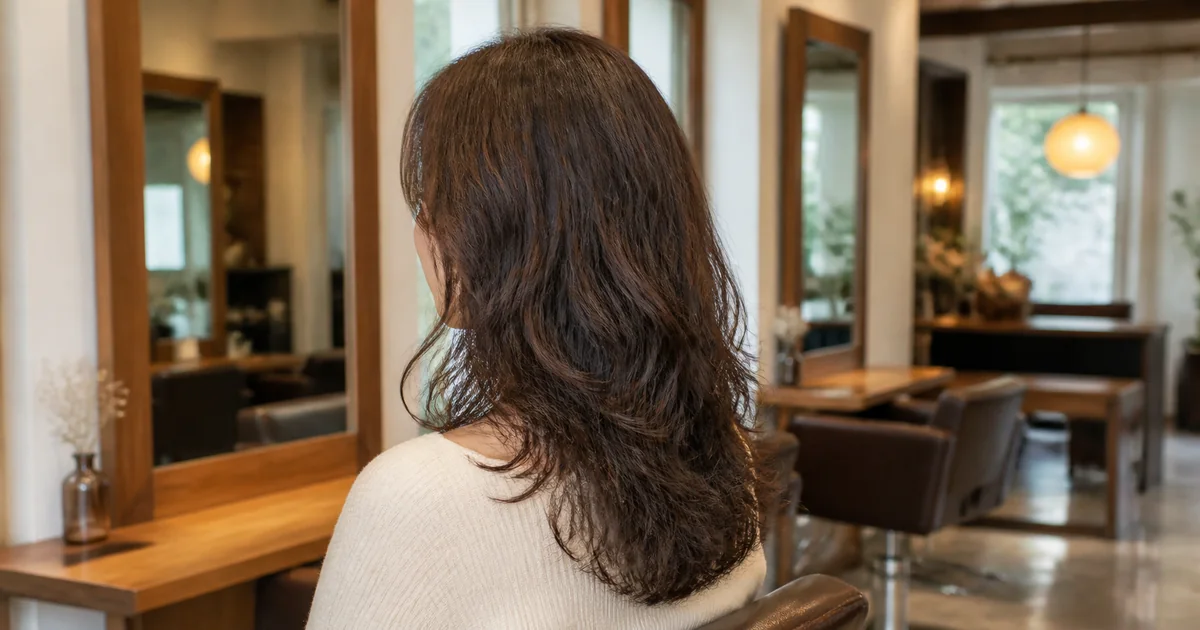
This is a hairstyle reference, not a real Faye client case or a before-and-after comparison. Different curl patterns may not reproduce the same shape.
Why curly hair can look shorter than expected after a cut
Length measured wet or stretched can spring up as curls dry. Curl patterns can differ across the same head, so do not assume that the back, behind the ears or around the face will shrink most. Check where each area falls when dry.
Describe the length you want in terms of where it should fall when dry, and say whether you need to tie it up. If it has looked shorter after washing, bring photos and explain your routine so the stylist can consider shrinkage, cut length and styling differences together.
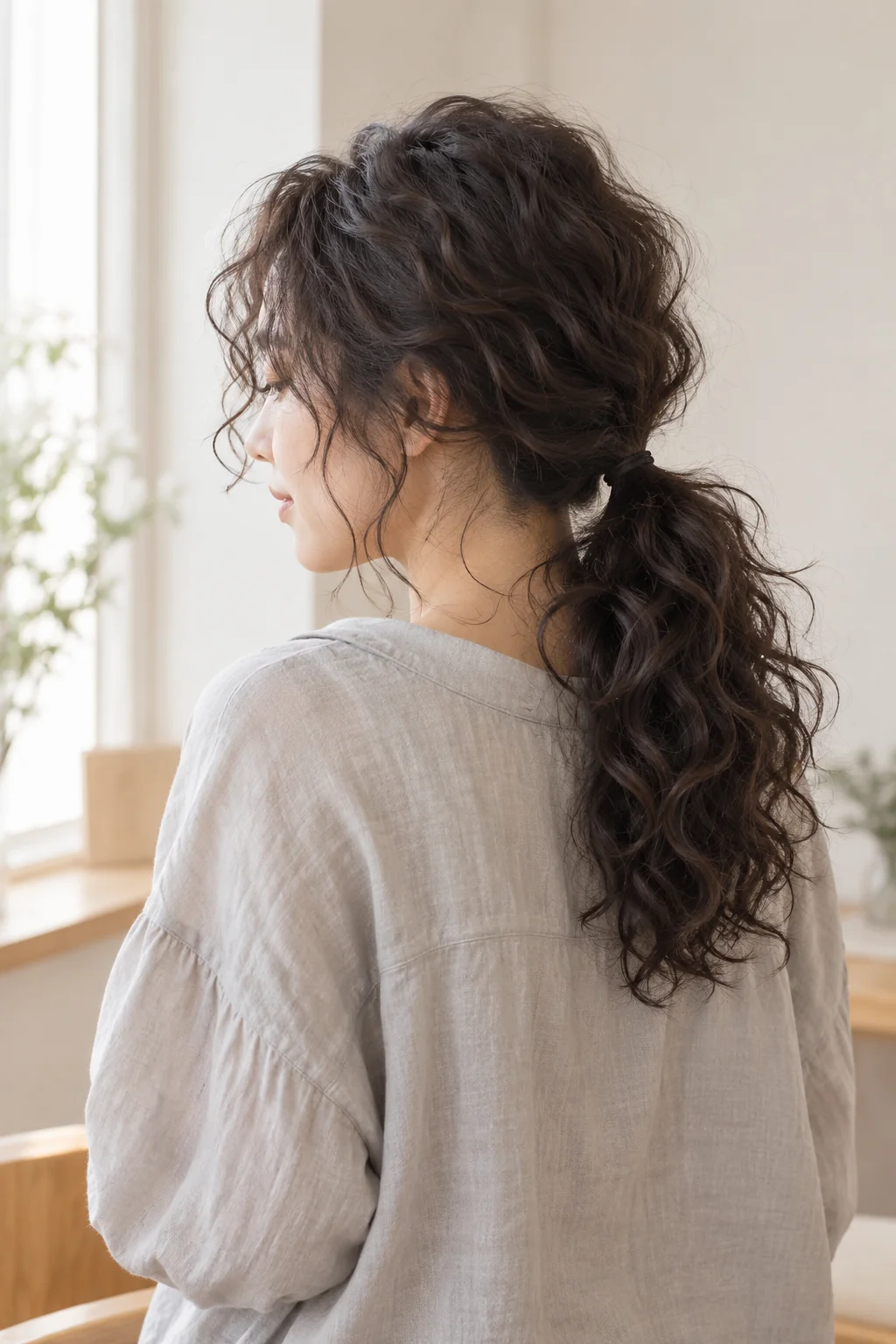
Tied-hair illustration, not a real Faye client. Before a cut, discuss where your dry hair falls and the length you need to keep for tying it up.
What shapes the layering decision
- Where the curl sits: roots, mid-lengths or ends.
- How thick the hair is, and which areas swell most.
- Whether the ends are bleached, dry or breaking.
- Whether you usually air dry, blow dry, or use a curling wand.
- The shortest length you would accept, and how long you spend on it daily.
The same layers can look different when blow-dried or air-dried. Retained weight should suit the curls you want to keep and your routine; air-drying alone does not determine one suitable cut for everyone.
When to discuss layers or retained weight
Use these as consultation topics rather than a fixed haircut you can select from a photo:
- Dense hair with weight at the ends and an unwanted triangular outline: discuss layer placement and targeted density adjustment, starting with where the hair expands most.
- Sides that spring up, many short sections or a difficult result after thinning: review existing length differences and where weight is needed before removing more simply to feel lighter.
- Lower density, thin ends or breakage: confirm the fullness and length you want to keep before choosing the layering range. Higher layers do not guarantee more volume.
- Keeping your curls while spending less time styling: bring photos after your usual wash and drying routine. Discuss an everyday shape rather than judging only a salon curling-wand finish.
Do higher layers always mean lighter hair?
Not necessarily. Layers that are too high or too choppy leave short sections without enough weight, and those are the first to swell when it is humid. No layering at all can leave thick hair with all the weight collected at the ends, reading as a triangle. The goal is a balance between outline, movement and how much work it takes to manage.
Layer placement should suit each area's curl pattern and the silhouette you like. Retaining weight and adding movement are both possible goals, with no universal height for everyone. A haircut also does not turn natural curls into straight hair.

Layered-shape reference, not a real Faye client or a before-and-after curly haircut. Flicked ends do not establish an air-dried result; layer placement and shrinkage need assessment of your actual curl pattern.
Thinning and layering are not the same thing
These two get talked about interchangeably, but they affect curly hair very differently.
Layering changes length differences; thinning adjusts density. Removing too much weight in an unsuitable area or leaving many short sections may make dry hair look more scattered, but not every density adjustment makes curls frizzier.
If thinning has made your hair harder to manage, explain which areas bother you. Discuss how much density to remove, what to retain and the dry silhouette instead of deciding in advance to thin the whole head.
How to explain what you want
Reference photos help, but so does describing what you dislike most: flat on top, too wide at the sides, ends narrowing into a triangle, or a fringe that lifts. That kind of "not this" information usually narrows the design down faster than "like this" does.
Two more things are worth mentioning up front: the shortest length you would accept, and how long it has been since your last cut. The first sets the safe range; the second helps work out whether the current shape is how it was cut, or how it has grown out.
If you are not sure how strong your curl is, start with the Banqiao natural curl guide. For daily handling of longer hair, see Korean-style smooth long hair for natural curls.
To talk through length and layering, send a photo of your hair air-dried to Faye's LINE.
Prepare three things: front, side and back photos of dry hair; the length you want to keep and whether you tie it up; your daily styling time and color or perm history from the past two years. See why to send hair photos before booking for the photo guide.
Explore haircuts in Banqiao for assessment and booking, or the hypothetical curly layering and thinning scenario. The latter uses an illustrative reference and is not a real client case.
Results vary with curl pattern, density and how the hair is styled.