Matte Hair Colour: Muted Tones, Suitability and Fading
How matte colour differs from ordinary colour: how low saturation is built, whether bleach is needed, which skin tones it suits, and what it fades to.
Matte is not a single colour but a direction: saturation is pulled down so the result reads soft and slightly hazy rather than bright and saturated. Matte grey-brown and matte ash both belong to this family; what differs is the hue underneath.
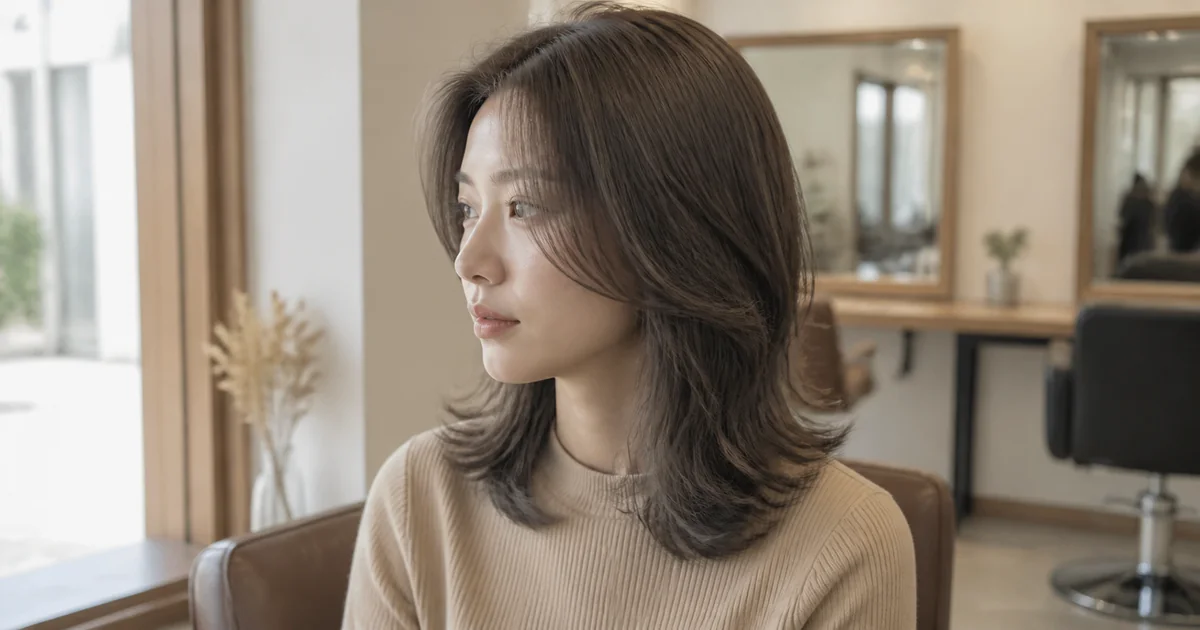
Illustrative scene, not an actual Faye client or a before-and-after comparison. It does not demonstrate a procedure, diagnose hair or scalp conditions, or guarantee results.
How is low saturation built?
Matte colour often describes a softer, muted impression, not one formula. Depth, warmth, base and light all affect appearance. Compare references and swatches in similar lighting rather than promising a fixed indoor-versus-outdoor result.

Muted-brown color reference, not a real Faye client or a guaranteed color result. Base color, treatment history and lighting affect its appearance; the image cannot determine whether bleach is needed or how the color will fade.
Does it need bleach?
That depends on the target lightness, not on the word "matte".
Matte describes saturation, which is a separate matter from lightness. If you want a mid-to-dark matte brown, most people can achieve it on natural hair with a single colour. But a bright, translucent matte grey or matte ash only shows on a light enough base, so lifting becomes necessary.
Whether to go that far depends on what the hair can take. For the full assessment, see do I need to bleach my hair to colour it.
What has to be handled first?
Share dates and areas for dark dye, red dye, bleaching and clear breakage. Areas may react differently; visible damage alone cannot predict absorption speed or colour. Assess the base and history first, with testing, a revised target or postponement where needed.
Related reading and consultation: what to prepare before colouring your hair for the first time.
Which skin tones does it suit?
Suitability depends on preference, everyday makeup and lighting, not a complexion label. Explain unwanted red, orange or yellow tones, then confirm depth. Hair colour changes the overall impression, not the skin itself.
Related reading and consultation: milk tea brown, cool tea brown.
What does it fade to?
Muted colour does not fade according to a universal smaller-pigment rule. Changes depend on formula, base, condition, washing and exposure, and need not end in warm brown. Record comparable photos to identify areas for tonal maintenance. Check colour-care directions instead of adding colour indiscriminately.
Related reading and consultation: how to make hair colour last longer, Faye on LINE.
The result, the lightness required, and how long it holds depend on your natural colour, chemical history, and hair condition, and are confirmed in person.