What Is an Air Cushion Perm? Root Volume, Suitable Hair Types and Daily Styling
How an air cushion perm lifts the roots, which hair types and lengths suit it, how to dry it, and how long the volume actually lasts.
The air cushion perm has become a common request on short and mid-length hair. It addresses one very specific complaint: flat roots and a head that reads as having no air in it — something fine hair and lower density run into most.
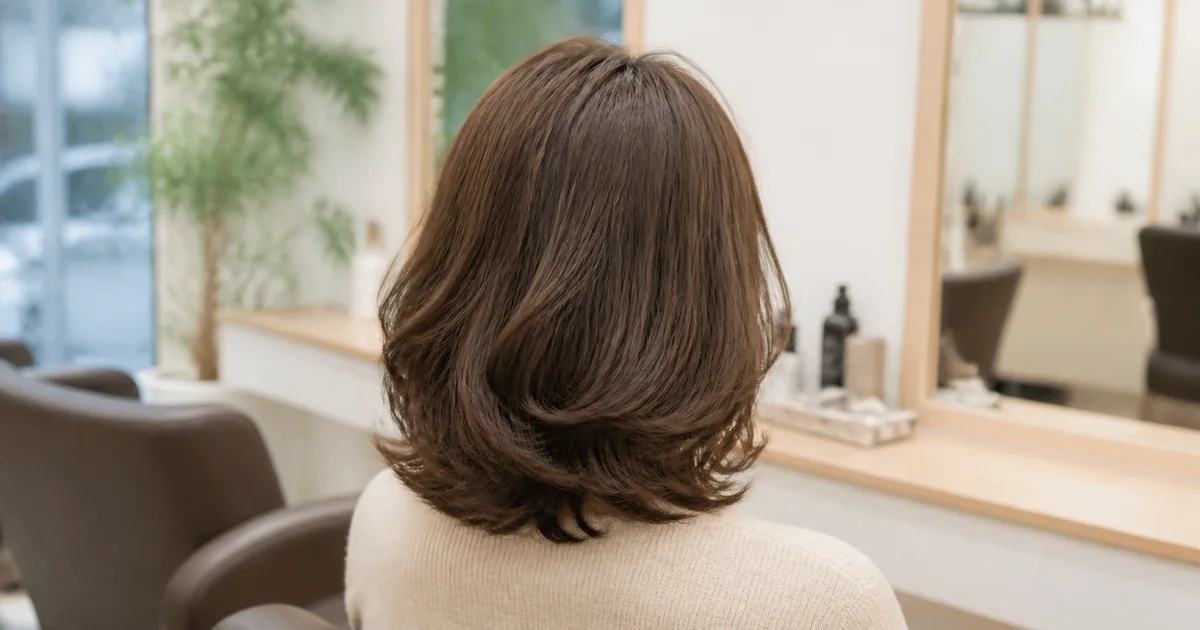
How it differs from an ordinary perm
The difference is where the curl sits.
When most people picture a perm, they picture curl through the ends. This is the reverse — the work happens from the roots through the mid-lengths, using a larger rod to create a gentle bend that lifts the hair from the base while the ends stay natural.
So it does not really look permed. What people usually notice first is that the hair has more body and the shape reads lighter, not that you have had it curled.
Which hair types and lengths suit it
Generally suits:
- Lower density with roots that flatten easily
- Fine hair that will not hold after blow-drying and drops within hours
- Short hair through to around collarbone length
- Someone willing to spend a few minutes drying but who does not want to use a wand
Worth discussing first:
- Already-thick hair with a rounder head shape, where added root volume can read as bigger overall
- Coarser hair, where the curl comes out stronger than expected
- Long hair, because the weight of the ends pulls the root lift back down
That last point deserves emphasis. An air cushion perm gives diminished results on long hair — not a technical shortcoming, just the physics of weight. If you have long hair and want volume, the usual route is adjusting where the layers sit, or a different curl design altogether.
How long does the volume last?
Not as long as curl through the ends.
The reason is straightforward: hair grows. This perm treats the root section, and new growth has not been treated, so over time the point where the lift begins moves further from the scalp and the effect becomes less obvious.
How long that takes depends on your growth rate and your hair. It is also why the return interval for an air cushion perm is usually shorter than for other perms — its relationship with new growth is more direct.
Drying it so it holds
This is not a perm you can ignore afterwards. How you dry it visibly changes the result.
- Dry the roots first, against the direction they fall. Lift the roots with your fingers and direct the air upwards from underneath. Do this properly and most of the volume is already there.
- The roots have to be completely dry. Half-dry roots collapse under their own weight, which undoes the previous step.
- Put product at the roots, not on the ends. Product on the ends adds weight and crushes the lift you just created.
If you usually air dry, the result will be noticeably weaker than a dried finish. Say so during the consultation — it changes how much curl should be built in.
Worth thinking about before the consultation
Beyond reference photos, these feed directly into the design:
- What you dislike most right now: the flatness, or the effort
- How many minutes you will spend drying in the morning
- Whether you have permed before, and how it went
- The shortest length you would accept
For the wider picture, start with types of perm and how to choose. If your hair is on the fine side, perming fine, soft hair covers it more fully.
To talk through curl and length, send a few photos of your hair air-dried through Faye's LINE.
Perm results vary with hair texture, density and how the hair is styled; the actual outcome follows an in-person assessment.